
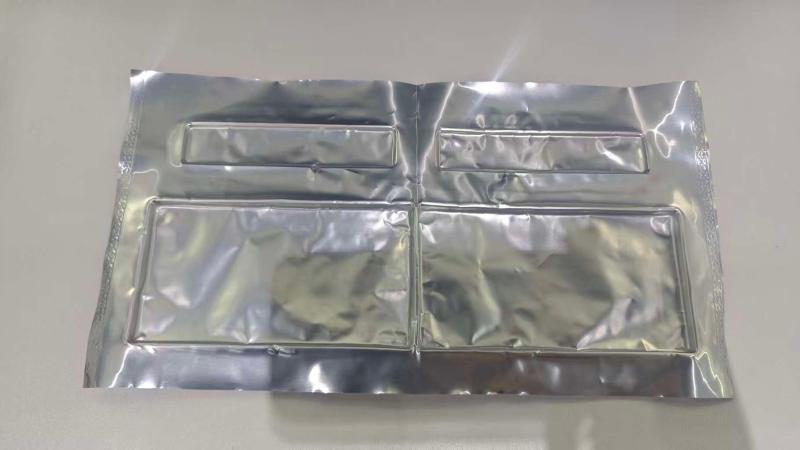
1. Linear laser measurement process
The time taken for measuring the size using a line laser is approximately 9.5 seconds.
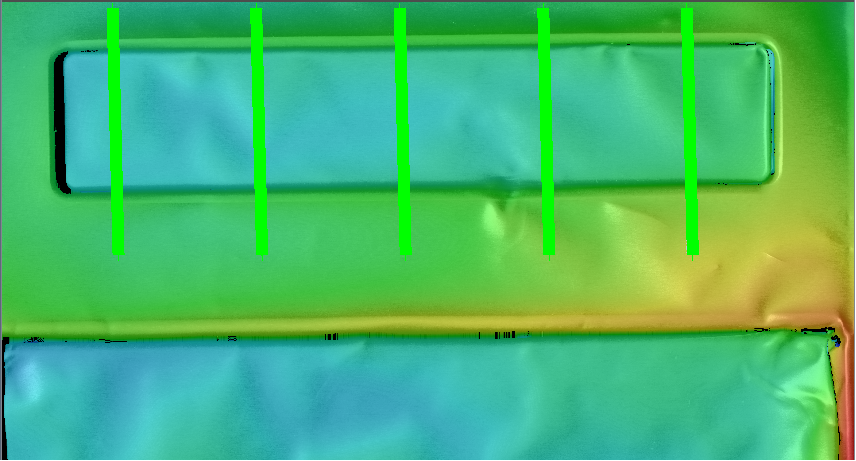
2.Imaging effect
Ⅰ. Line lasers can generate three-dimensional scanning information graphs, which can provide a more intuitive view of the surface condition of the product.
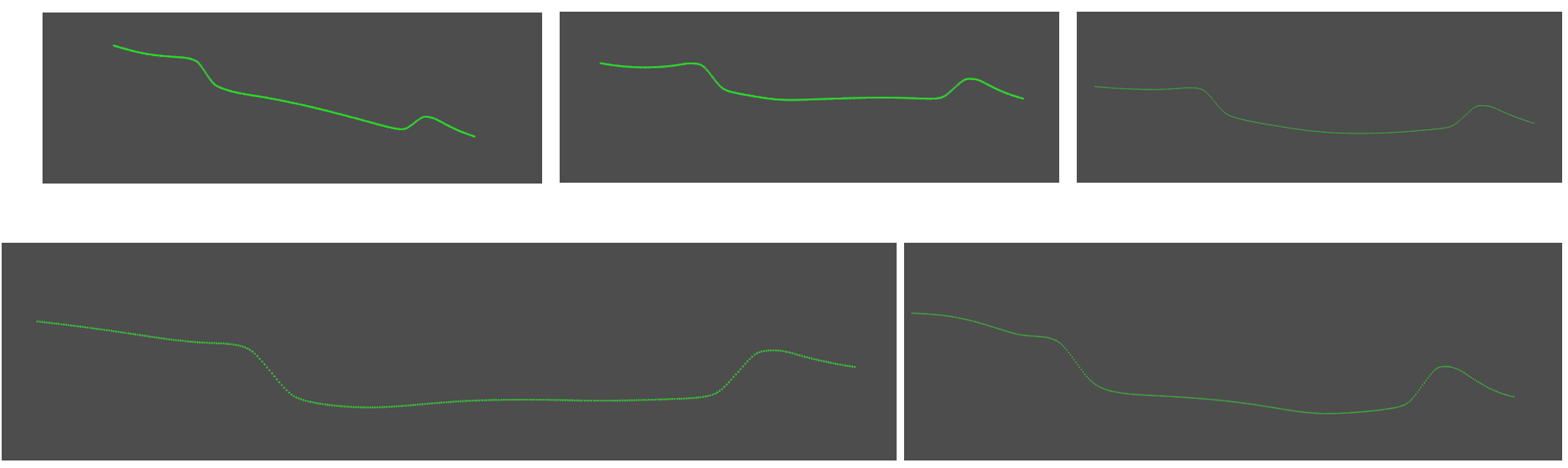
Ⅱ . Line laser cross-sectional point cloud image
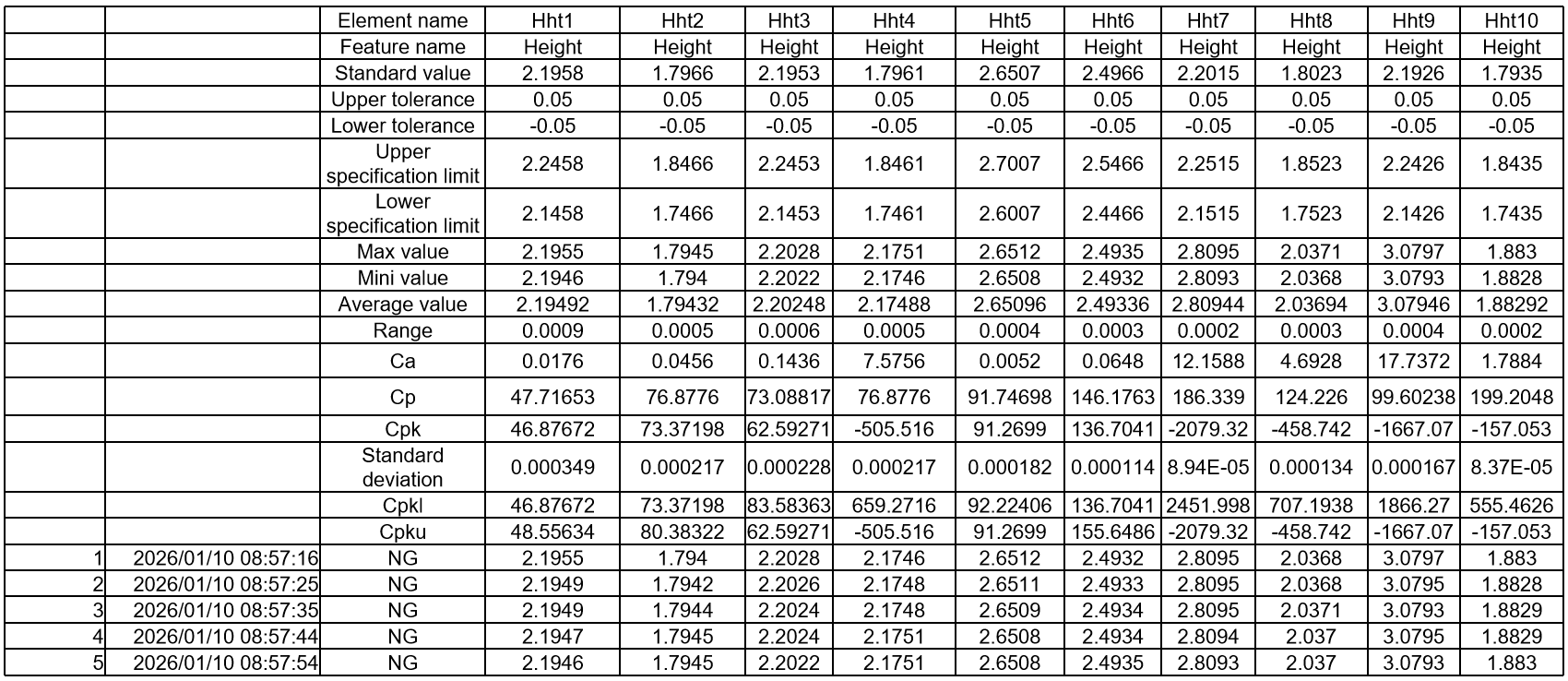
Ⅲ . Measurement data obtained using line laser technology
COBEKK suggests using measuring instruments equipped with wired laser devices.The main reasons are as follows:
1. Measurement efficiency increases by orders of magnitude
Point lasers require point-by-point scanning, relying on dense point collection and path planning to complete surface/contour measurements, which is time-consuming.
Line-scan lasers project a single line at a time, simultaneously capturing contour data from hundreds or thousands of points. Combined with motion mechanisms, this boosts efficiency by tens of times, directly overcoming production bottlenecks.
2. More Comprehensive Data Dimensions and Higher Information Density
Point lasers output only single coordinate points per scan, resulting in limited data dimensions. Reconstructing curved surfaces requires extensive repetitive scanning, often leading to data gaps or feature loss.
Line-scan lasers generate a complete contour line in a single pass, enabling direct construction of local cross-sections of the workpiece. By stitching these sections, a 3D point cloud is formed that more accurately reflects surface topography (e.g., concavities, steps, weld seams, etc.).
3. Enhanced adaptability for complex workpieces, reducing measurement blind spots
Point lasers face complex path planning when encountering curved surfaces or irregularly shaped parts (e.g., turbine blades, automotive body panels), often leading to missed measurements or inconsistent accuracy due to angle limitations. The linear laser spot of line-scan lasers better conforms to irregular surfaces, covering a wider lateral range in a single pass. This reduces stringent requirements for motion trajectories, making it particularly suitable for parts with complex contours and undulating surfaces, significantly reducing measurement blind spots.
