Solution Overview
The groove-border height of battery aluminum foil directly affects subsequent lamination assembly. Excessive deviation will cause stacking misalignment, internal short-circuit risk and reduced battery consistency. Traditional point-laser scanning requires point-by-point acquisition, which is time-consuming and prone to missing surface feature information on undulating workpieces.
COBEKK adopts LVT Series Line-Laser & Vision Hybrid 3D Measuring Machine for non-contact 3D profile scanning.
Capture complete scanning process for quality review
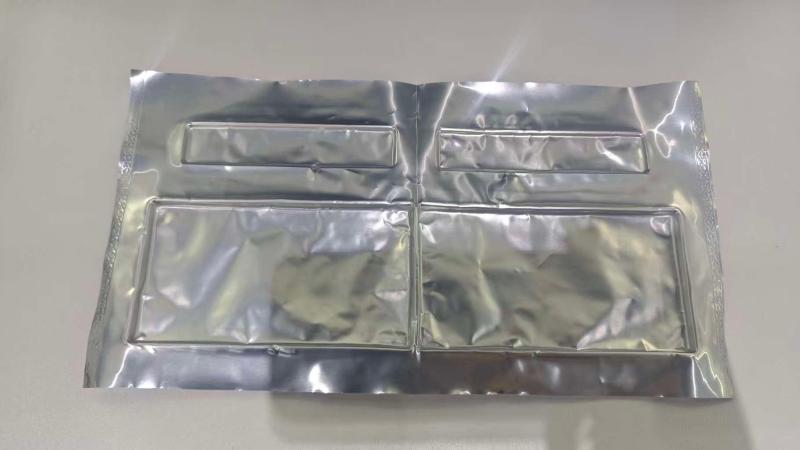
Measurement tests were performed on customer-supplied battery aluminum-foil samples.
Ⅰ. Full dimension measurement cycle via line-laser takes approximately 9.5 seconds.
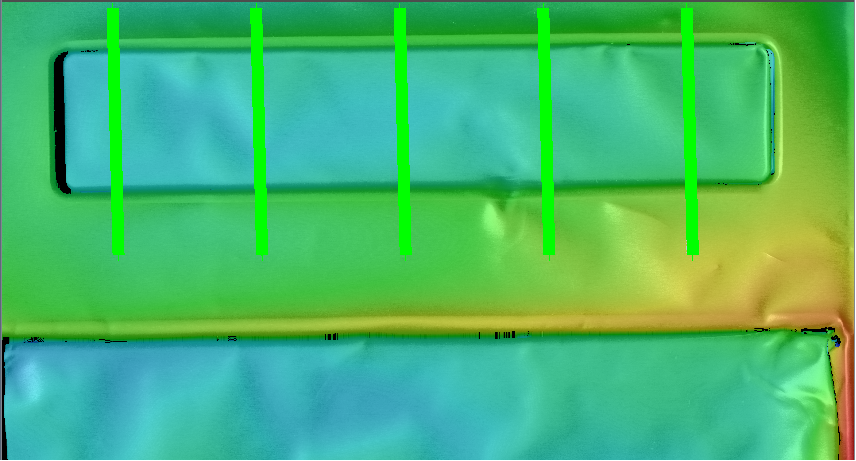
Ⅱ. 3D scanning graph is generated, presenting intuitive surface topography of aluminum-foil parts.
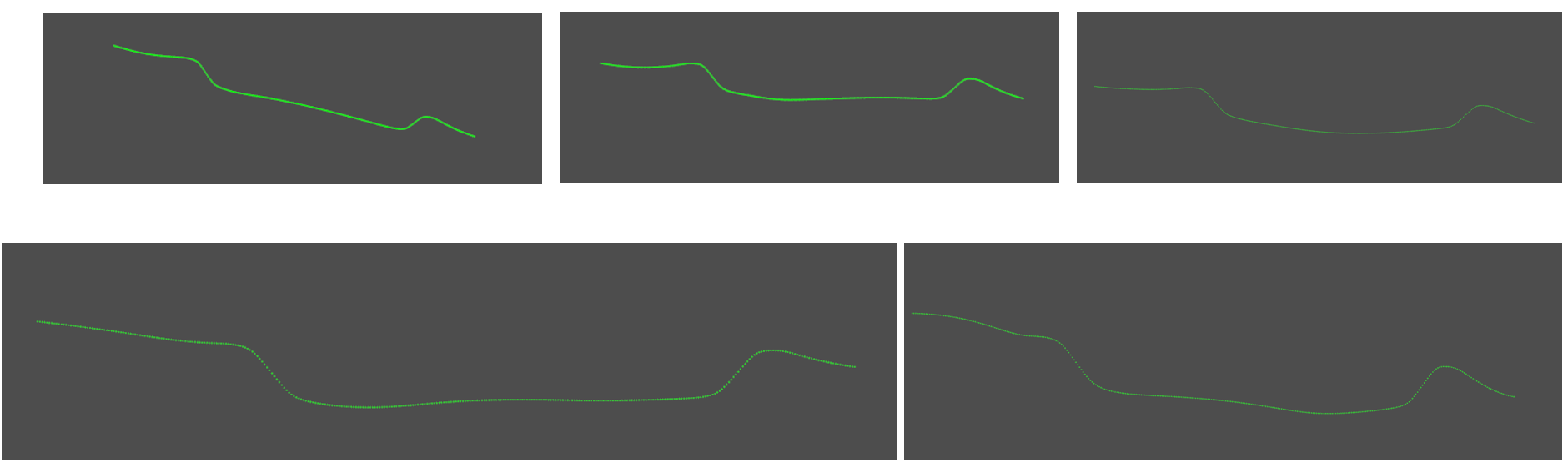
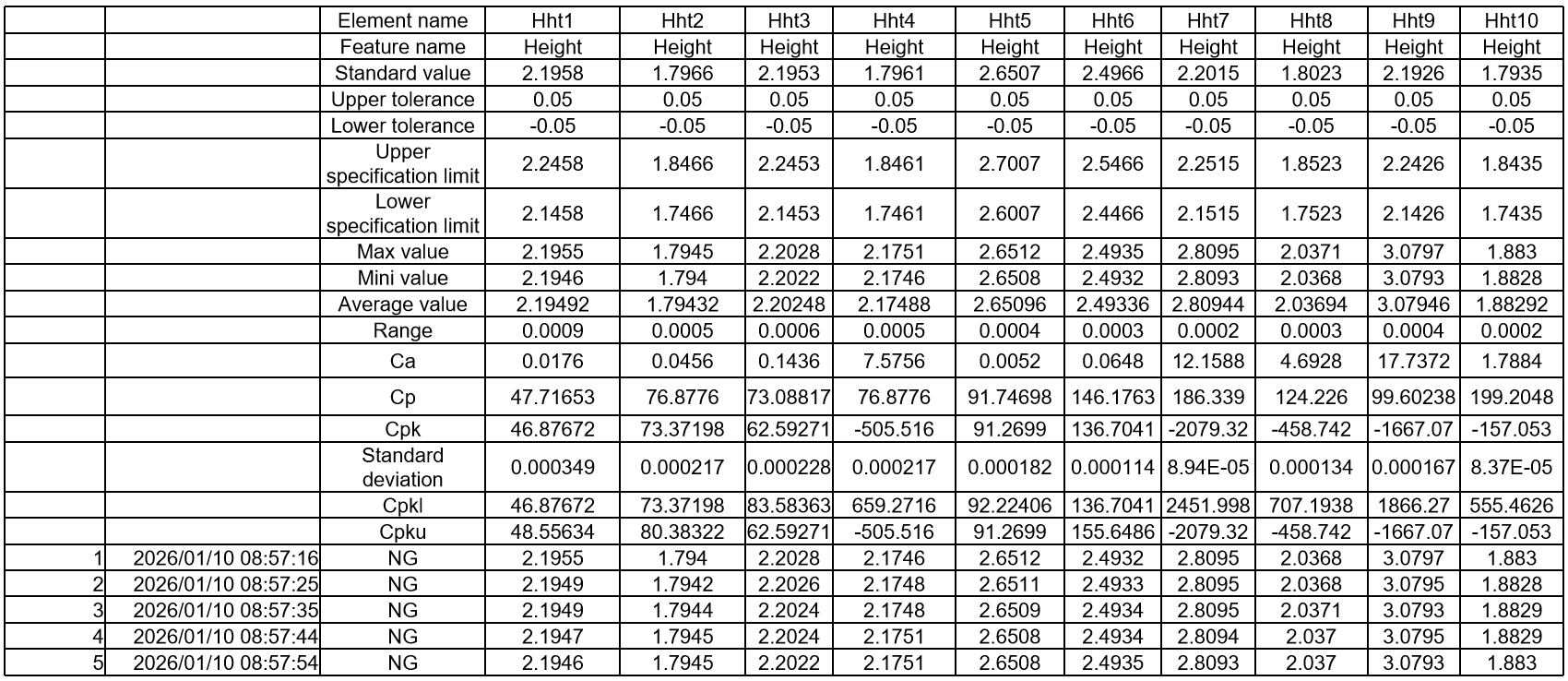
Ⅲ. Cross-section point-cloud image and original measurement datasets are exported for height-difference evaluation between groove bottom and frame border. Scanning results support stable dimensional verification for mass production.
1.High measurement efficiency: Line-laser captures abundant contour points in one projection, far outperforming point-by-point scanning.
2.High-density comprehensive data: Reconstruct 3D point-cloud to restore complex surface features such as concavities and steps.
3.Strong adaptability for complex profiles: Reduce measurement blind spots for curved or undulating workpieces.
4.Non-contact acquisition: Avoid deformation of thin aluminum-foil samples; retain scanning graphics and raw data for traceability.
For groove-border height-difference inspection of battery aluminum foil in new-energy industry, the LVT Series Line-Laser & Vision Hybrid 3D Measuring Machine is recommended. It delivers efficient, complete 3D profile measurement and satisfies dimensional quality-control requirements for new-energy battery components.
New-energy battery manufacturing, power-battery component processing, new-energy material inspection, precision aluminum-alloy part production